Hard-Rock Mining — Jaw + Cone Package
Mill-feed CSS held within 2 mm after retuning secondary cone automation and staging dual mantle kits at the regional hub.
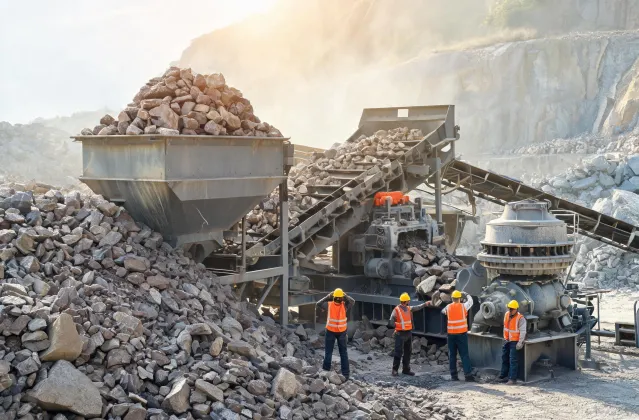
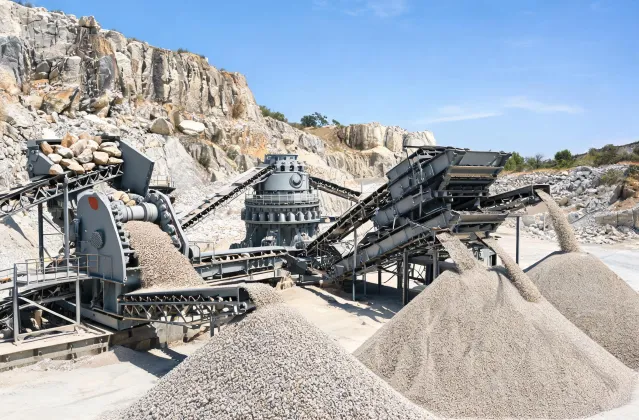
Problem-led configurations — not a generic product dump. Select your scenario and see which jaw, cone, impact and screen combination fits before you request a quote. We talk feed size, CSS and output capacity (t/h), not carbon slogans.
Interactive guide for application engineers and buyers. Results are directional; final quotes confirm operating weight, chamber geometry and emissions documentation.
Outcomes emphasize throughput, CSS stability, liner windows and staging — not vague greenwashing claims. Packages stay honest about limits: an impact crusher will not replace a jaw on 800 mm blasted feed, and wet screens need slurry-pump duty defined before the PO.
Mill-feed CSS held within 2 mm after retuning secondary cone automation and staging dual mantle kits at the regional hub.
Tracked jaw/cone/screen string kept asphalt plants fed through a rainy season by matching truck body volume to sustained t/h, not nameplate peaks.
Urban recycling yard cut rebar carryover after magnet duty was sized to the impact chamber, protecting the tertiary screen media.
Canal borrow pit recovered fines with wet decks and sand wash modules; slurry-pump wet ends staged before the first flood-season surge.
Buyers still argue this at every quarry tender. Both chambers can open a circuit — the right answer depends on feed hardness, product shape targets and liner economics, not brochure slogans.
Simple compressive chamber, lower liner complexity and broad tolerance for feed hardness up to Mohs ≈ 9. Best when blasted feed is large (typically 600–1,200 mm jaw opening class) and the site needs a durable primary before a cone. Maintenance crews can swap jaw plates without specialized rotor tooling.
Higher cubicity and better shape for asphalt or concrete fractions when feed is softer limestone, recycled concrete or well-fragmented rock. Blow bars and aprons cost more per tonne on abrasive granite, so impact is rarely the economic primary on hard silica feeds above ~150 MPa UCS.
Metso application engineers size jaw opening (mm), feed size and discharge opening against rock UCS, then decide whether an impact chamber belongs in primary or tertiary duty — never as a silent substitute for a jaw on 800 mm blasted feed.
Directional bands for plant managers. Final CSS, output capacity (t/h) and operating weight are confirmed on quotation for a named rock and duty cycle.
| Key spec | Typical band (directional) | Notes |
|---|---|---|
| Output capacity | 200–600 t/h by cone class | HP300-class mid-range vs HP500-class high capacity |
| Feed size | ≤ 220–280 mm into secondary cone | Primary jaw opening sized separately to blasted feed |
| Operating weight | ~13.5–22 t (cone modules) | Mobile string weight confirmed with chassis options |
| Hydraulic system pressure | ~280–320 bar | Tramp-release and CSS actuators |
| Engine power (mobile) | ~250–315 kW | Tier 4 Final / Stage V packages available |
Share feed size, rock type, target fractions and whether the site needs Tier 4 Final documentation. Application engineers return machine classes, expected output capacity bands and liner staging options sized to your pit.