+1 866 638 7601 [email protected]
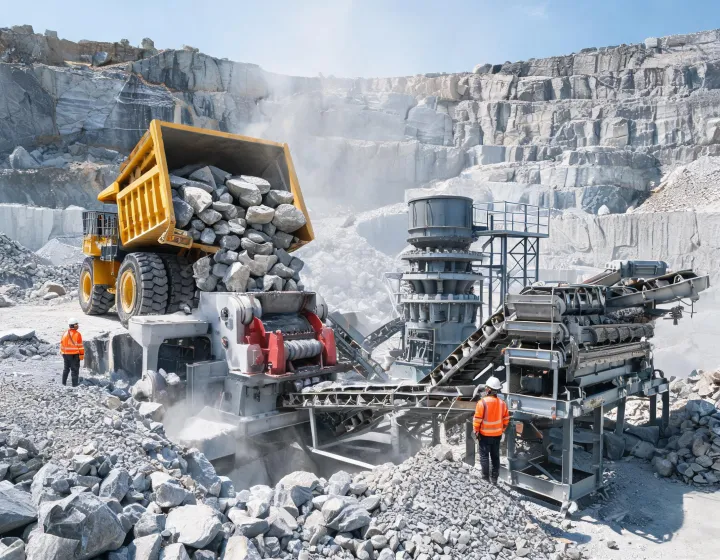
Metso cone crusher and vibrating screen in limestone quarry
Crushing & Screening Guidance

Metso Crushers & Screens Sized for Mining and Aggregate Throughput

Tell our application desk your feed size (mm), closed-side setting and target output capacity (t/h) — we map jaw, cone and impact circuits with CE marking, ISO plant documentation and EPA Tier 4 Final packages so procurement closes without second-guessing liner life.

FAQ by Crushing Workflow

Answers our field advisors give when plant managers compare jaw versus cone selection, screen media life and slurry-pump duty before issuing a PO.

Crushing & Screening

How often do jaw plates need replacing on abrasive granite?

On hard granite with high silica, jaw plate life commonly lands between 350–700 operating hours depending on feed size distribution and CSS discipline. We gauge plate thickness at planned shutdowns and quote OEM-profile replacements from the nearest parts hub so the primary chamber is not left open overnight.

When should I choose a cone crusher instead of a jaw for secondary duty?

Use a cone when you need a tighter CSS band, cubical product and stable throughput into asphalt or concrete fractions. Keep the jaw as the primary for feed sizes above roughly 600–800 mm where compressive crushing is more efficient than impact. Our Solutions matcher walks through jaw versus cone checkpoints with feed size and abrasion index inputs.

Earthmoving Feed & Haul

What bucket fill factor should we plan when loading the primary hopper?

Clayey feed often packs 105–115% of rated bucket volume; blasted rock closer to 85–95%. We tune loader cycle time against crusher output capacity (t/h) during commissioning so the hopper does not starve the jaw or overload the feeder.

How do we keep haul trucks from stacking behind a mobile plant?

Match truck body volume to the plant’s sustained t/h, not peak nameplate. We model feeder surge, screen bypass and stockpile reclaim so queue time stays under the limit your quarry supervisor sets for shift bonuses.

Aftermarket Parts

What warranty covers OEM-equivalent mantles, concaves and screen media?

Wear parts are quoted with hours-or-months coverage — typically 2,000 hours or 12 months on manganese liners when feed chemistry matches the alloy grade — logged against serial numbers in regional hubs.

Can slurry pumps and crusher spare parts ship on the same PO?

Yes. Parts desks consolidate mantle/concave kits, screen decks and slurry-pump wet ends so remote quarries receive one freight event. Critical seals and hydraulic kits can be air-freighted when the outage cost exceeds freight.

Why plant managers stay with Metso

Hydraulics, powertrains, chamber geometry and dealer response built for multi-shift crushing days

Each band answers a contractor pain point with a measurable control — fluid cleanliness, emissions calibration, liner windows and MTTR — not brochure adjectives.

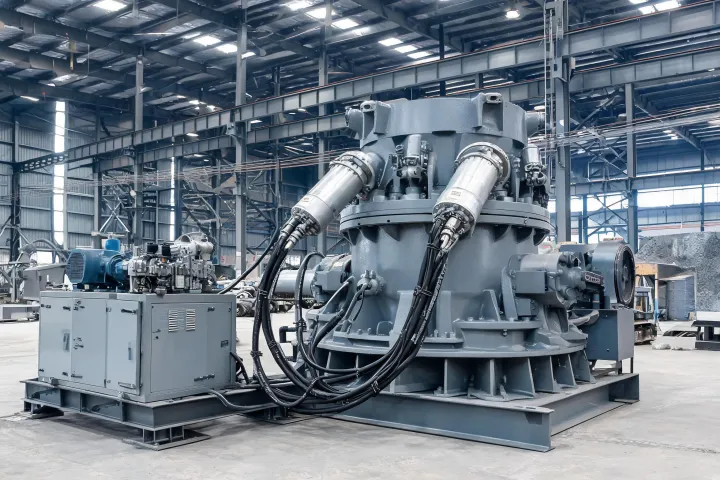
Hydraulic power unit on cone crusher

Hydraulic tramp release held to ISO 4406 cleanliness

Closed-center pumps meter oil between CSS adjustment and tramp-release cylinders so a cone can clear uncrushables without stalling the feeder. Factory flush logs travel with the machine, and dealers sample return-line oil at 250 hours so particle counts stay inside ISO 4406 18/16/13 before valve spools stick on dusty quarry pads.
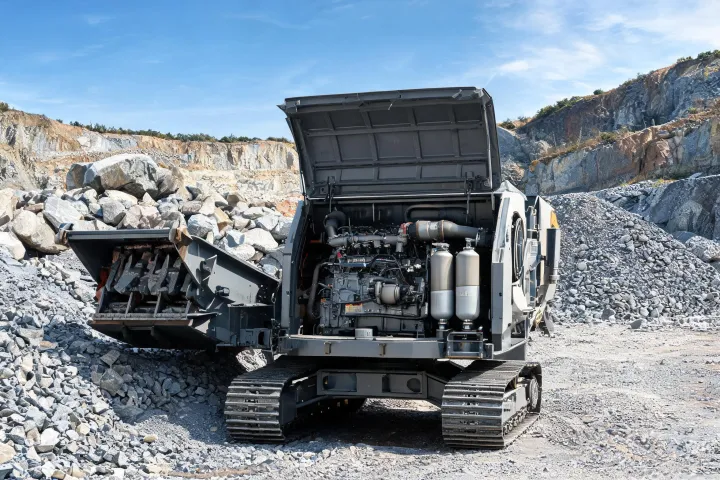
Tier 4 Final engine on mobile crushing plant

Tier 4 Final / Stage V powertrains for regulated pits

Mobile jaw and cone plants destined for EPA or EU Stage V sites ship with DPF + SCR aftertreatment and in-cab DEF alarms. We attach emissions documentation to each serial so procurement can paste it into tender binders without chasing dealers mid-bid.

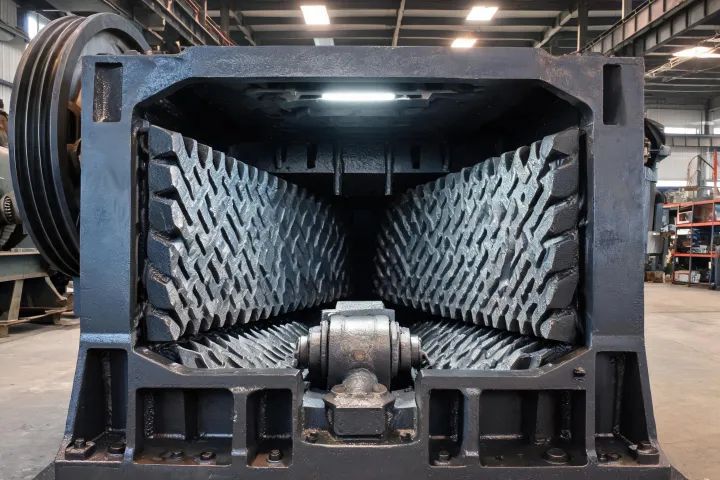
Jaw crusher chamber with manganese plates

Chamber geometry built for rebuild intervals

Jaw opening (mm), feed size and discharge opening are specified against rock UCS so liner kits target predictable wear bands. Rebuild packages for mantles, concaves and toggle seats land beside planned screen-media changes instead of surprise weekend outages.

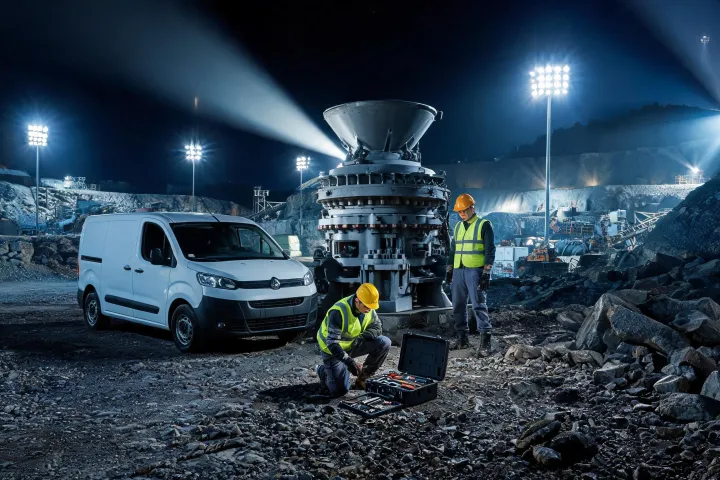
Field service van at floodlit crushing plant

Regional parts hubs and field-service dispatch

With roughly 800,000 m² of production footprint and fleets shipping about 8,000 units a year, Metso keeps regional hubs stocked for liners, screen media and slurry-pump wet ends. Contracted sites target under 18-hour mean time to repair on critical crushers.

Cone Crusher — Mid-Range vs High-Capacity Class

Side-by-side specs plant engineers paste into tender appendices when choosing between a mid-range secondary and a high-capacity tertiary cone. Diff rows highlight the parameters that usually decide the PO.

HP300-class secondary HP500-class high capacity
Typical feed size≤ 220 mm≤ 280 mm
Output capacity200–350 t/h350–600 t/h
CSS adjustmentHydraulicHydraulic + automation
Operating weight~13.5 t~22 t
Engine power (mobile)~250 kW~315 kW
Hydraulic system pressure~280 bar~320 bar
Emissions packageTier 4 Final / Stage VTier 4 Final / Stage V
From the quarry pad

What plant supervisors tell us after commissioning

“We commissioned the cone crusher line in eleven days and held CSS within 2 mm across the first 1,000 hours — liner gauges finally matched the weekly production report.”
Project EngineerTier-1 aggregate EPC, MENA
“Jaw plate life jumped from 280 to 520 hours after Metso retuned feed size distribution and stopped us over-crushing before the secondary cone.”
Quarry SuperintendentGranite pit, North America
“Screen media and slurry-pump wet ends arrived on one freight event — our remote copper circuit stopped waiting three days between SKUs.”
Maintenance LeadHard-rock mine, South America

Quote Your Next Crushing Circuit

Single-column inquiry for plant managers who already know feed size, CSS and delivery month. Fields post through the shared feedback endpoint used by the site-wide quote modal.

Required
Required
Valid email required
Required
Required
Describe feed size, CSS target and throughput

Field-engineered. Site-proven. Quarry-certified.

From primary jaw duty to tertiary cone polish — we ship the circuit and stay on-site through the first 1,000 crushing hours.

Schedule a Plant Walk